Does India Need a Procurement Law or an Ability to Facilitate it Effectively?
OTHER CONTEMPORARY ISSUES IN FINANCIAL AND BUSINESS POLICY
Stuti Rastogi
3/28/20266 min read
I. Introduction
Following the Free Trade Agreement between India and UK, the Indian government has been constantly reflecting on opening the government procurement markets to foreign companies. Public procurement is the process of purchase of goods and services by the government entities and agencies from the private sector. The legal basis of this is found in Articles 298 and 299 of the Constitution. Particularly, the General Financial Rules 2017 (“GFR”) lay down the fundamental principles, general procedure and contract management for the procurement by the Ministries and other Departments.
From the ancient Egyptian days of building pyramids to the present day AI predicting supply chain details, while the scale of procurement has widened, the standards applicable to government public procurement remain largely the same.
II. Key Structural Challenges
GFR is drafted to be exhaustive in nature. However, it is often found incomplete without the legislative power emanating from a comprehensive procurement law. Some states, like Tamil Nadu and Rajasthan, have enacted their respective state procurement acts to fill this gap. However, the appeal mechanism for the enforceability of these acts appears to be a paper tiger. For instance, the Rajasthan Transparency Public Procurement Act, 2012 (“Act”) states that in case of any contravention by the procuring entity, the aggrieved bidder may file an appeal to a designated officer of the same entity. In case of an unsatisfactory decision, a second appeal follows to an officer/authority designated by the State government. Moreover, Section 40 of the same Act also enumerates certain matters which are exempted from an appeal against the procuring entity, such as the cancellation of a contract. It is seen that in the provisions of these state procurement acts, the government entity plays the quasi-judicial role in deciding appeals against themselves, making such decisions prone to bias. They manage to evade judicial oversight contrary to the judgement in Subodh Kumar Singh Rathour v. Chief Executive Officer, where the apex court held that the procurement process is a matter of public interest which shall be kept in check by judicial oversight.
While these irregularities suggest enactment of a central procurement law such as the UK's Procurement Act 2023, another study suggests that public procurement law and corruption perception do not go hand-in-hand. Instead, it was common to find countries with a high score in public procurement law and a low score in corruption perception index and vice-versa. This was attributed to two observations by the authors, the first being isomorphic mimicry. In this case, countries are trying to implement global best practices and global laws without having adequate capacity or intention to do so. An example of it could be a complete green procurement system or becoming a party to the Agreement on Government Procurement. However, without effective state machinery and competitive domestic bidders, the changes will be inadequate to uphold sustainability or fair competition. The second reason is observed to be the failure of invisible infrastructure, considered the foundation for the implementation of any legislation or policy. Invisible infrastructure includes efficient police machinery, access to information, research & development, natural justice, etc. This is important because procurement is run on a competitive tendering process amongst numerous bidders, with fair evaluation and maintenance of the quality of procured goods and services. This complex process may involve regulatory compliances, adjudication of offences and dispute resolution. Therefore, a fair procurement process works on the foundation of a fair judiciary, an incorruptible State and the right to information for all bidders.
Public Procurement in India constitutes roughly around 30% of the GDP and is a crucial driver of the country’s socio-economic development. Amongst the various hindrances in the procurement process, the most frequent ones are tender alterations, payment delays, power imbalance between contracting parties, bid rigging and a one-size-fits-all contract design. These disparities compromise genuine competition and the quality of procurement.
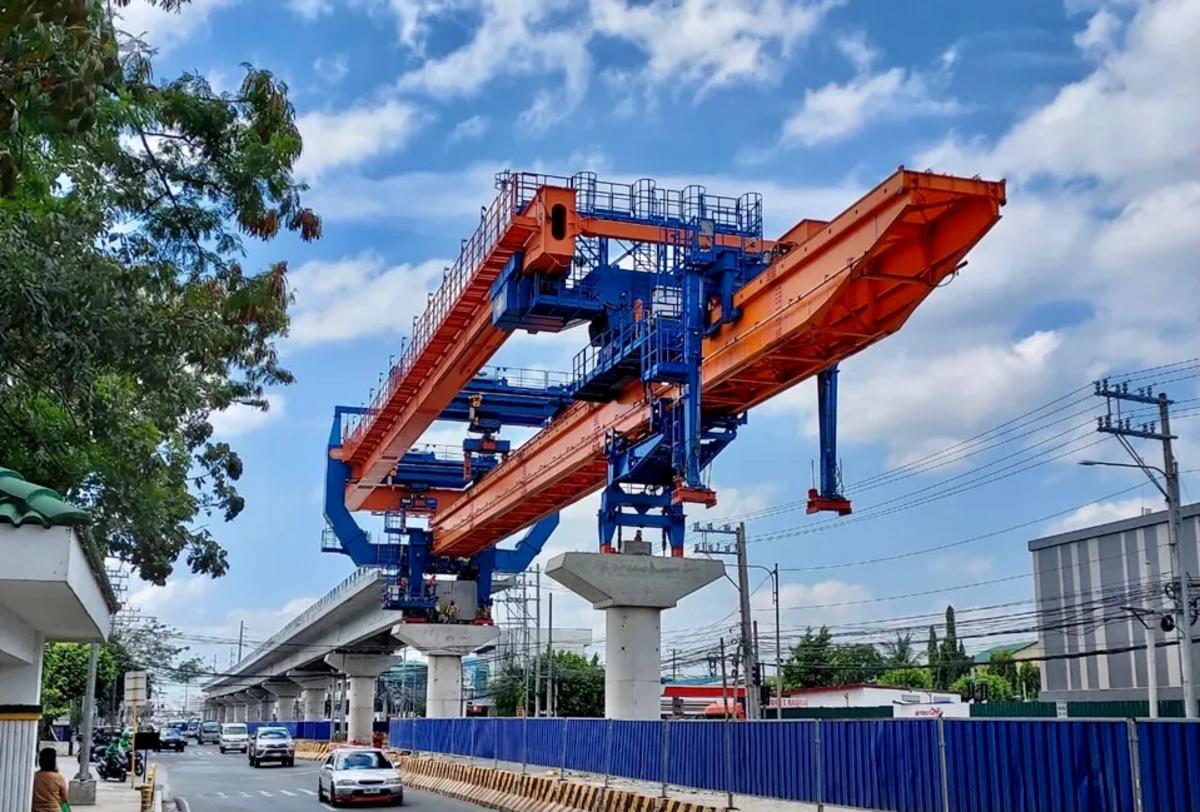
A comparison of the two metro projects from India underscores the impact of such hindrances on procurement. The lag in Calcutta’s metro completion was almost two decades, while for Delhi’s it was just a year. The difference in the outcomes points to the institutional design of the procuring entities. The Calcutta metro project witnessed a lack of coordination between the state government and the local agencies, which hindered work implementation, causing tender modifications and contractual delays. Frequent changes of important personnel disrupted expert management. This was worsened due to limited financial powers of the project’s General Manager which snowballed additional delays and compliance costs. However, in the case of the Delhi metro, the institutional design was innovative and a corporate entity, Delhi Metro Rail Corporation (“DMRC”), was formed. Diverse expertise through functional directors of DMRC with sufficient powers facilitated quick decisions. To escape the delay in the release of funds, DMRC explored other funding routes of equity and loans. Japan International Cooperation Agency’s long-term and low-interest concessional loan maintained the pace of the ongoing work. The distinguished expertise of the leading management was another major contributing factor towards the Delhi metro’s success.
III. Approach: Innovating, Reforming and Implementing
In a 2014 paper, “How Relevant is the Principle of Transparency in Public Procurement?”, the author argues that transparency is a sine qua non of public procurement. Now, this calls for a two-pronged approach. First, measures to ensure transparency, such as e-procurement, open tenders, pre-established prices and terms. For instance, Uttar Pradesh, as one of the frontrunners in e-procurement through the Government e-Marketplace, has managed to contain procurement litigations and increase transparency. Similarly, in Chile, digitisation delivered direct benefits, doubling small and medium enterprise participation, enhancing efficiency, and achieving financial savings up to 3.5%. The changes were basic and included suppliers’ documentation, objective evaluation criteria and access to free and fair information.
Following these measures, a dedicated enforcement mechanism is needed to hold the parties accountable for lapses. Currently, the majority of contracts have alternate dispute resolution as their preferred dispute resolution mechanism. The Guidelines for Arbitration and Mediation in Public Procurement provide that arbitration must be restricted to disputes with a maximum value of 10 crores, and in matters of higher value, a High-Level Committee shall be constituted for mediation. However, arbitration has its own limitations. It often weighs heavily on the bidder who is already at the lower rung of the power hierarchy, while the government plays a dual role of the state as well as a market participant. In a government notification, it was highlighted that arbitration has been unsatisfactory in many cases against a government entity or agency. The process is also time-consuming and expensive for a bidder facing financial constraints due to hefty security deposits and payment delays. Moreover, a large majority of these cases are ultimately challenged in higher courts. To simplify these issues, a specialized tribunal similar to Germany’s public procurement tribunals could be established. In another case, comprehensive dispute resolution guidelines could fix the litigation conundrum.
The vision must be to develop the public procurement system as a streamlined profession. For the same, it is pertinent to develop an enabling environment for capacity building. According to the World Bank, this must include defining a competency baseline for different categories of staff, identifying training priorities, building accessible training curricula and certifying procurement professionals. A database could be further developed to evaluate public procurement across sectors, states, etc, to formulate a rating system. This will improve resource allocation based on the analysis of performance and efficiency while enhancing competitive federalism.
Along with the internal reforms, trying globally acclaimed best practices and modifying them, specific to our needs, is an intelligent and innovative way to reform procurement systems. An example is Germany’s Competence Centre for Innovative Procurement (KOINNO), which is specifically designed to encourage innovative suppliers and startups in the market. Such centres could also pave a way towards sustainable procurement policy, as in the UK, which enlists sustainable practices including procurement of sustainable seafood, embedding social value into tenders above £50,000 and alignment with circular economy objectives. To promote equitable innovation, on similar lines to the UK Financial Conduct Authority’s regulatory sandbox, exemptions could be allowed in India for important research institutions. Such exemptions will allow temporary or selective waivers from GFR to test new, innovative products and businesses in the procurement markets, encouraging further research and development.
Reviewing contract designs for different procurement projects, Federation Internationale des Ingenieurs-Conseils (FIDIC) standard contracts can be referred to. These are a set of contracts globally used for civil engineering/infrastructure projects; they aim to fairly balance the risks among the parties. Alternatively, contracts based on ADB’s procurement cycle can be used. They are commonly used for robust contract management and program monitoring.
IV. Conclusion
India is currently witnessing a rapid economic growth, and its public procurement forms a substantial part of its GDP. Therefore, it is crucial to identify and address the loopholes in the system given the scale of impact it has on the government machinery and the private sector. It allows the fulfilment of policy objectives, public needs and economic growth. With reforms addressing widespread corruption, lack of streamlined adjudication, opacity in bidding procedures, redundant and generic institutional and contract designs, India is capable of a globally competitive public procurement system. Certain achievements have already been seen through e-procurement, policy for procurement targets from Micro and Small Enterprises (MSEs), SC/ST and women entrepreneurs.
A comprehensive legislation may not be the silver bullet to tackle poor procurement practices. However, building state capacity, using alternative funding mechanisms, knowledge-sharing among countries/states and use of innovation & technology can certainly improve the invisible infrastructure for public procurement and its governance.
About the Author
Stuti Rastogi is a lawyer and likes writing on the intersection of law and public policy.
Editors
Snigdha Ghose, Editor-in-Chief
Tanay Hindocha, Senior Editor